The 5 days that we spent in Kansas City is a testament to how much we both enjoyed being there. However, we had a journey to resume and many many miles to conquer; so with the Beast rested and watered, we continued east along Highway 35 toward Liberty, and outlaw country.
I didn’t know it before I got here, but it appears that throughout 19th century Missouri has offered refuge to many a thief and villain. Most notably, it was the home to one Mr. Jesse James, who after fighting for the Confederacy in the American Civil War in 1866, embarked on an anti-establishment robbing spree with his 2 brothers (as part of the now infamous James Gang). In the civil war, Missouri was a border state, which meant that it had both split allegiances and strong ties with the south. Therefore, Jesse James’ defiance of the post-war Unionist state authority was, and still remains something that has been romanticised and celebrated here. However, the fact remains that Jesse James did not actually admit to any of his crimes before Robert Ford assassinated him in 1882. This means that each criminal act now linked with his name is as much the product of speculation and hearsay as anything else.
Make of this what you will.
Liberty is the place where Jesse James supposedly staged his and America’s first daylight bank robbery at 103 North Water Street. The bank where this took place still stands (albeit recently renovated) on the corner of a well-preserved central square that is ringed by a neighbourhood of small well-maintained wooden houses. Understandably, and in-keeping with the outlaw-ishness of its history, Liberty is now a centre for law enforcement, with an impressive central courthouse and nearby jail.
With our bellies full of history, it was now time for something different, something natural and something detached from urban living. This involved taking a long drive southeast on Highway 7 toward the Mark Twain National Forest, via the small and avoidable towns that surround the otherwise intensely pretty Lake Ozark. With this journey came our passage into a new season and the final termination of our long hot Indian summer. Now, as the number of trees intensified on the landscape, so did the abundance of vibrant autumnal colours. As we looked out of the Beast intense reds, yellows and rusty greens caught the still intense sunlight and dominated the view as we passed through the hamlets, villages and small-scale agriculture that clung to this long and narrow winding road.
Such a pretty place.
Tuesday, 19 October 2010
Missouri
Labels:
Liberty,
Mark Twain National Forest,
Missouri,
Tiightwad
Sunday, 17 October 2010
Kansas City
Before we arrived in this large but sparse city, we spent the night in one of its many southern out of town suburbs. As a consequence, and partly due to a deeply unpleasant meal in Applebees (not vege friendly at all), my already low expectation of the confluence of the Missouri and Kansas rivers managed to plummet to rock bottom. Honestly, at this point, after the rural endlesslessness through which we had passed to get here, I would have been happy if this city offered anything at all.
The next morning we set off through the first rainfall that we had confronted for 2 months. This trip immediately passed us through some of the most confusing and illogical elevated freeway systems ever constructed. Not for the first time on this trip, we were scared and bemused by a traffic system seemingly conceived after a long hallucinogenic drug binge. It was frightening. Lanes would suddenly split in two directions and present any inattentive driver with a concrete divider and a quickly issued ticket to oblivion. This was not good.
As the downtown area and the state of Missouri slowly emerged through the spray of a torrential downpour, our expectations were immediately surpassed. A sprinkle of intricately decorated gothic skyscrapers and large industrial brick structures poked through a haze created by the rain. This was by far the most interesting architecture that we had seen since leaving San Francisco, so armed only with a small umbrella we parked, and set out to explored the various central districts that define this city.
Kansas City is by far the most pleasant surprise that we have discovered so far this trip. Between an eerily quiet downtown area and a cosmopolitan 'Plaza' district sits a low lying (former)industrial sprawl that reminded both of us of Brooklyn. Here, countless bars and galleries and empty studio spaces are sitting, just waiting for the right kind of creative investment. I'm not sure what it was about this place, but it certainly felt like a place oozing with potential. I liked it a lot.
The next morning we set off through the first rainfall that we had confronted for 2 months. This trip immediately passed us through some of the most confusing and illogical elevated freeway systems ever constructed. Not for the first time on this trip, we were scared and bemused by a traffic system seemingly conceived after a long hallucinogenic drug binge. It was frightening. Lanes would suddenly split in two directions and present any inattentive driver with a concrete divider and a quickly issued ticket to oblivion. This was not good.
As the downtown area and the state of Missouri slowly emerged through the spray of a torrential downpour, our expectations were immediately surpassed. A sprinkle of intricately decorated gothic skyscrapers and large industrial brick structures poked through a haze created by the rain. This was by far the most interesting architecture that we had seen since leaving San Francisco, so armed only with a small umbrella we parked, and set out to explored the various central districts that define this city.
Kansas City is by far the most pleasant surprise that we have discovered so far this trip. Between an eerily quiet downtown area and a cosmopolitan 'Plaza' district sits a low lying (former)industrial sprawl that reminded both of us of Brooklyn. Here, countless bars and galleries and empty studio spaces are sitting, just waiting for the right kind of creative investment. I'm not sure what it was about this place, but it certainly felt like a place oozing with potential. I liked it a lot.
Friday, 15 October 2010
First Leica Roll
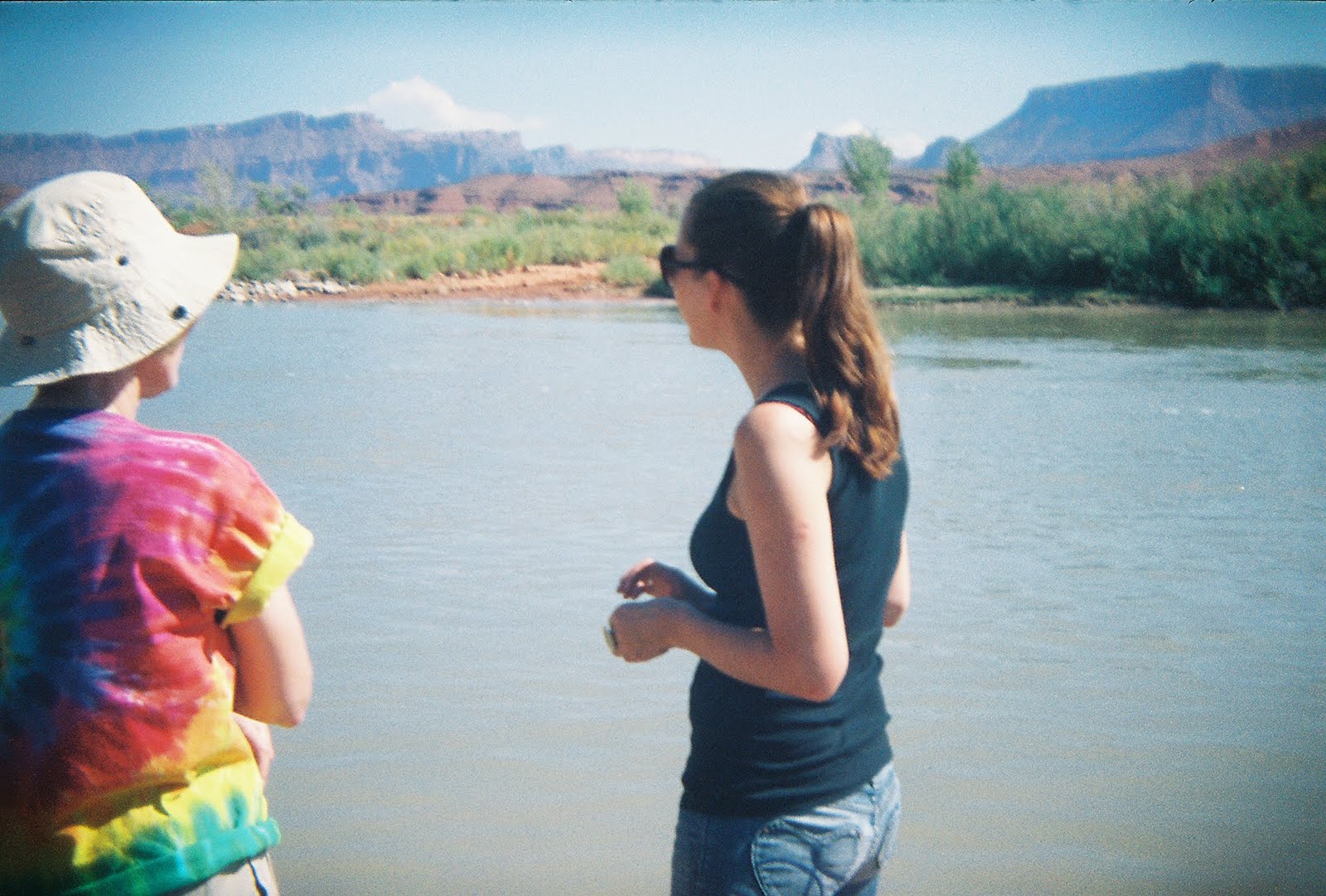
I just got the first roll of film developed from my Leica. Here are a couple of shots...


© All Images By Paul
Wednesday, 13 October 2010
East Kansas
Back in the first half of the 19th century, when California was a part of Mexico and Texas was a republic, the Santa Fe Trail was the main route into the unorganised territories beyond the ever moving western frontier. Before the creation of the railroads, this important wagon carved highway was primarily used for trade and the facilitation of the 'Manifest Destiny'; the belief that the immigrant communities who settled the north eastern colonies were destined to expand and settle the whole of this sparsely populated continent.
Now, for the remainder of our time in the state of Kansas the path of this trail would loosely determine our route north east toward Kansas City and Missouri. So, with Kinsley and the half way point across America now firmly planted in our rear view mirror, we headed towards the nearest town of Greensburg. My first impression of this town was that it seemed like it was brand new. All around us, widely separated partially constructed buildings exposed their innards to the dry local air. All of this provided a surreal spectacle that could only be explained after I did a little research...
It appears that late on May 4th 2007, Greensburg was hit by a devastating 205 mph tornado that destroyed 95 percent of the city and killed eleven people. It was declared an official disaster area by President Bush shortly after, and has been rebuilding itself as a new town and model of green living ever since.
After refueling the Beast we continued our passage via the back roads that meander north east through this flat state. We had been eager to avoid the Interstate where possible, and we were being rewarded with small town after small town, each different, and each forgotten by the bland and generic developments that have clung to the few major motor arteries that we had previously been forced to utilise.
This passage more then consumed the remainder of the day as we continued our journey up through Mennonite country, and onward towards a beautiful fading sunset that hovered over Marion Lake and our last night outside of Kansas City.
Now, for the remainder of our time in the state of Kansas the path of this trail would loosely determine our route north east toward Kansas City and Missouri. So, with Kinsley and the half way point across America now firmly planted in our rear view mirror, we headed towards the nearest town of Greensburg. My first impression of this town was that it seemed like it was brand new. All around us, widely separated partially constructed buildings exposed their innards to the dry local air. All of this provided a surreal spectacle that could only be explained after I did a little research...
It appears that late on May 4th 2007, Greensburg was hit by a devastating 205 mph tornado that destroyed 95 percent of the city and killed eleven people. It was declared an official disaster area by President Bush shortly after, and has been rebuilding itself as a new town and model of green living ever since.
After refueling the Beast we continued our passage via the back roads that meander north east through this flat state. We had been eager to avoid the Interstate where possible, and we were being rewarded with small town after small town, each different, and each forgotten by the bland and generic developments that have clung to the few major motor arteries that we had previously been forced to utilise.
This passage more then consumed the remainder of the day as we continued our journey up through Mennonite country, and onward towards a beautiful fading sunset that hovered over Marion Lake and our last night outside of Kansas City.
Forgotten Church
A Kansas Sunset
A Kansas SunsetThe next morning we headed to Hutchinson. I was a little giddy given the possibility of confronting a childhood obsession, but I composed myself as we entered the towns Cosmosphere and Space Centre. There was a suppressed 8 year old version of myself that was a little excited about what lay ahead in the foyer of that clinical concrete building and he wasn’t about to be disappointed...
... as we entered through an unassuming glass doorway, its presence was immediate and impressive; the curved contours of a complete SR-71A Blackbird, the US spy-plane that, in model form had hung from my bedroom ceiling as a child. It is still hard for me to get my head round the fact that such an incredibly beautiful machine could be such an intimidating agent of war and destruction.
Beyond the space centre, Hutchinson is actually quite an interesting place. Apart from the seemingly random existence of this space centre and its twee little planetarium, it sits above a vast salt mine, over 600 feet beneath the surface, which is now used to for the safe keeping of the negatives of some of the earliest and most important works of American cinema.
... as we entered through an unassuming glass doorway, its presence was immediate and impressive; the curved contours of a complete SR-71A Blackbird, the US spy-plane that, in model form had hung from my bedroom ceiling as a child. It is still hard for me to get my head round the fact that such an incredibly beautiful machine could be such an intimidating agent of war and destruction.
Beyond the space centre, Hutchinson is actually quite an interesting place. Apart from the seemingly random existence of this space centre and its twee little planetarium, it sits above a vast salt mine, over 600 feet beneath the surface, which is now used to for the safe keeping of the negatives of some of the earliest and most important works of American cinema.
© All Images By Paul
West Kansas
As we continued east through Colorado, still on Old Highway 50, the landscape quickly blunted. The peaks and forests of the west had now been replaced by a wide and flat expanse of rurality. Farms increasingly dominated every perspective and numerous concrete granaries stood, like huge cathedrals that dominated the land. Looking out at endless fields in every direction, the common description that this area is the Breadbasket of America seemed appropriate. It felt like we had arrived in another country, so different was the landscape from what we had seen up until now.
After we crossed the Kansas state border we crossed another timezone and headed to Holcomb, the setting of a tragedy that went on to inspire Truman Capote to combine journalism and literature in 1966, the year that he published the first 'non-fiction novel'. 'In Cold Blood' (the book that he wrote) is a favourite of mine. It was the product of over 6 years of intense local research and it captured (to my eyes at least) the impact of the murders that took place in this small town, with both sympathy and poetry. It's legacy with regard to literature is obvious. By contrast, its legacy with regard to this small town is definitely more muted. Holcomb now seems like a sombre place that is imprisoned by its past. It appears concious not to cash in on the memory of the victims of that terrible crime (the Clutter family) and it does this with a dignity that I know would not be reflected had this event occurred elsewhere.

A Huge Granary and Holcomb (setting of 'In Cold Blood')
After we crossed the Kansas state border we crossed another timezone and headed to Holcomb, the setting of a tragedy that went on to inspire Truman Capote to combine journalism and literature in 1966, the year that he published the first 'non-fiction novel'. 'In Cold Blood' (the book that he wrote) is a favourite of mine. It was the product of over 6 years of intense local research and it captured (to my eyes at least) the impact of the murders that took place in this small town, with both sympathy and poetry. It's legacy with regard to literature is obvious. By contrast, its legacy with regard to this small town is definitely more muted. Holcomb now seems like a sombre place that is imprisoned by its past. It appears concious not to cash in on the memory of the victims of that terrible crime (the Clutter family) and it does this with a dignity that I know would not be reflected had this event occurred elsewhere.

A Huge Granary and Holcomb (setting of 'In Cold Blood')
After a quick picnic in Holcomb, we jumped back in the Beast and continued east toward Dodge City, a former frontier town immortalised in countless wild-west stories. This town used to mark the boundary between the lawlessness of an untamed west and the more established settlements of the east. It prospered up until the late 1800's when Kansas officials decided to curb the activities of the countless saloon's and brothels that existed within its boundaries. Thankfully, or not, depending on your perspective, nothing of this wild history remains today. The town is aware of its past and has various references to its former glory emblazoned on bill boards, contrived historical recreations and on street signs; but the truth is that modern day Dodge is not the place that it should be given its history. How very disappointing.
So out of boredom rather due to some argument picked with a filthy gunman in a whisky swilling saloon, we got the hell out of Dodge. We were approaching the halfway point of our journey across to the Atlantic and so wanted to mark this achievement by visiting one of the handful of places that claims to be at the centre of middle America. We chose Kinsley, a town which has unofficially renamed itself 'Midway' to do this. It sits at the exact midpoint between New York and San Francisco, and offered little apart from a sleepy Main Street and some fantastically rustic wooden homes that clung to small dirt roads.
I have to admit that I liked this place because it represented something truly and authentically American. It was a remote functioning town, geographically separated by a large distance from everything other then wide sun baked fields. For a man from the comparatively small and congested island of Britain, it felt like another planet.
© All Images By Paul
I have to admit that I liked this place because it represented something truly and authentically American. It was a remote functioning town, geographically separated by a large distance from everything other then wide sun baked fields. For a man from the comparatively small and congested island of Britain, it felt like another planet.
© All Images By Paul
Sunday, 10 October 2010
Central & Eastern Colorado
The continental divide is a line of peaks that runs through the centre of the Rocky Mountains. Apparently, although this sounds a little too simplistic for a skeptic like me, every drop of rain that lands to the east of this line will, through a variety of river systems, end up in the Atlantic ocean. By contrast, every drop that lands to the west (you guessed it), will end up in the Pacific. This is interesting if it is true. It means that, geologically at least, we are half way across America. It will also mean that it should be predominantly down hill as we continue our relentless march towards the eastern shoreline. The Beast will be happy about this.
As we descended from the rooftop of America we entered Salida. Now, as long as you ignore the moderately sized doughnut of industrial sprawl that has wrapped itself around this (and most American) town(s), Salida is a picturesque and enjoyable place to be. It has embraced and preserved all the best elements of traditional Americana within its well maintained streets, bars and independent coffee shops. Also, alluring galleries and vintage shops are available around a tidy central park through which a steady, crystal clear stream flows, and beyond which the Rockies can be seen, tall and dark in the distance.
I really liked this place.
Next was Cannon City, our first experience of a modern interpretation of the traditional gun slinging prison town. This place was not pretty, but I did like its honesty. So many modern small American towns appear to have stripped away their architectural heritage and replaced it with a sanatised and generic interpretation of modern living. To a European, these towns appear obsessed with the motor car, and separated from the grit and reality of the past. Cannon City is not like this at all and as a result it was a deeply fascinating place to spend an afternoon en route to the tourist trap that is Colorado Springs, and ultimately Denver.
Denver was a pleasant, if not immediately inspiring city with an attractive old town and a thriving government initiated Art district to its south, where local artists have been given the run of a deprived district (Santa Fe) in the bid to instigate gentrification. It was an interesting place to spend an afternoon.
This would be our last taste of a city prior to entry into the flat-lands that dominate the state of Kansas...
© All Images By Paul
As we descended from the rooftop of America we entered Salida. Now, as long as you ignore the moderately sized doughnut of industrial sprawl that has wrapped itself around this (and most American) town(s), Salida is a picturesque and enjoyable place to be. It has embraced and preserved all the best elements of traditional Americana within its well maintained streets, bars and independent coffee shops. Also, alluring galleries and vintage shops are available around a tidy central park through which a steady, crystal clear stream flows, and beyond which the Rockies can be seen, tall and dark in the distance.
I really liked this place.
Next was Cannon City, our first experience of a modern interpretation of the traditional gun slinging prison town. This place was not pretty, but I did like its honesty. So many modern small American towns appear to have stripped away their architectural heritage and replaced it with a sanatised and generic interpretation of modern living. To a European, these towns appear obsessed with the motor car, and separated from the grit and reality of the past. Cannon City is not like this at all and as a result it was a deeply fascinating place to spend an afternoon en route to the tourist trap that is Colorado Springs, and ultimately Denver.
Denver was a pleasant, if not immediately inspiring city with an attractive old town and a thriving government initiated Art district to its south, where local artists have been given the run of a deprived district (Santa Fe) in the bid to instigate gentrification. It was an interesting place to spend an afternoon.
This would be our last taste of a city prior to entry into the flat-lands that dominate the state of Kansas...
© All Images By Paul
Saturday, 9 October 2010
Western Colorado
We entered Colorado via Highway 70, which is the main artery linking this mountainous state with its westerly neighbour. Our first port of call was 30 miles east of the border, in the pristine, clean and pleasant streets of old town Grand Junction. Here, we stayed at the Hotel Melrose, a sincere and perfectly preserved classic hotel where every room was different and styled with an honest interpretation of the past. With our lodging secured, we ventured out onto a pretty but quiet main street that was sprinkled with sculpture and craft shops. Following a short walk, we found a brewery/ restaurant, which after a brief conversation with a waiter, was able to modify its menu to cater for the appetites of two particularly ravenous vegetarians. Typical of the meals that we have encountered so far, the food was solid, fresh and comforting. The beer however, was something special (Widowmaker - Rockslide Brewery); Pale and wheaty, it was brewed on location and is so far the best of the generally high quality of beer that we have encountered right across the States.
Honestly, if there is one British attitude toward this country that is just wrong, it is the belief that Americans can’t do beer. It pains me to admit it, but today, there is more regional variety and quality in the average American bar then there is in the average British pub. It’s such a shame, but we have systematically destroyed our brewing heritage in the UK. It saddens me, and it makes me really appreciate the efforts of CAMRA and the establishments that preserve the few real ales and micro-breweries that remain.
Anyway, onwards and upwards.
The next day we headed out along Old Highway 50 towards the Rocky Mountains and a second night in what was proving to be an intensely beautiful state. En route, we passed through Delta, a town that appears to exist for no other purpose other then to claim its self awarded title of ‘American capital of murals’. It was undeniably a bizarre place, but it was definitely worth the 10 minutes it took to walk down its main street.
We then started our climb into the Rocky Mountains, which upon first impression reminded us both of a larger version of the landscape that you see in the Highlands of Scotland. This soon changed however, as we climbed higher and further into the huge evergreen forests that sit on its peak. Here lush green pines were lightly peppered with the bright yellow leaves of Aspens, each of which seemed to perform vibrantly within the autumn breeze and under the autumn sun. This journey had certainly taken us towards, round and over some of the most picturesque scenes that we had traveled through so far and I was loving every minute of it.
That night we decided to aim for Gunnison for no reason other then it was roughly a 3rd of the way across the rectangle that is Colorado. Gunnison, was a friendly and surprisingly hip college town that appeared to be preparing itself for the winter ski season. So after a coffee and a tasty vegan muffin, we departed the following morning, ...still heading east.
© All Images By Paul
Grand Junction
Honestly, if there is one British attitude toward this country that is just wrong, it is the belief that Americans can’t do beer. It pains me to admit it, but today, there is more regional variety and quality in the average American bar then there is in the average British pub. It’s such a shame, but we have systematically destroyed our brewing heritage in the UK. It saddens me, and it makes me really appreciate the efforts of CAMRA and the establishments that preserve the few real ales and micro-breweries that remain.
Anyway, onwards and upwards.
The next day we headed out along Old Highway 50 towards the Rocky Mountains and a second night in what was proving to be an intensely beautiful state. En route, we passed through Delta, a town that appears to exist for no other purpose other then to claim its self awarded title of ‘American capital of murals’. It was undeniably a bizarre place, but it was definitely worth the 10 minutes it took to walk down its main street.
We then started our climb into the Rocky Mountains, which upon first impression reminded us both of a larger version of the landscape that you see in the Highlands of Scotland. This soon changed however, as we climbed higher and further into the huge evergreen forests that sit on its peak. Here lush green pines were lightly peppered with the bright yellow leaves of Aspens, each of which seemed to perform vibrantly within the autumn breeze and under the autumn sun. This journey had certainly taken us towards, round and over some of the most picturesque scenes that we had traveled through so far and I was loving every minute of it.
That night we decided to aim for Gunnison for no reason other then it was roughly a 3rd of the way across the rectangle that is Colorado. Gunnison, was a friendly and surprisingly hip college town that appeared to be preparing itself for the winter ski season. So after a coffee and a tasty vegan muffin, we departed the following morning, ...still heading east.
© All Images By Paul
Monday, 4 October 2010
Moab
And so onwards to Moab, an old uranium mining town that sits snuggly between the state parks of Arches and Canyonlands. It was "Outside" magazine which, tapping into a modern re-invigoration for adventure, helped to transform this once sleepy desert community into the thriving small town that it is today.
We arrived in the mid-afternoon after a long and pretty stretch of Highway 50, which the Beast devoured feverishly. Our first aim was to find lodging, something that we did, eventually, after slowly accepting that all local motels were going to charge an arm and a leg. That night, with an uncontrollable hunger, we hopped onto the main street to consume beer and pizza in a friendly bar which was nestled in-between the many T-shirt and 'craft' shops that dominate this town. The following morning, after a fantastic breakfast at the Eccentric Cafe, we went to Arches National park for a hike and some much needed exercise (this time armed with proper boots).
I am conscious that I am rapidly running out of adjectives to describe this state, which is concerning, but also inevitable when you consider that we have been confronted with such relentless beauty since we've been here. I guess that the best that I can do to describe the prehistoric stone structures that make up this park, is to emphasise their immensity and prevalence, and to describe how they appear to glide effortlessly out of the sun scorched red sands that dominate every view.
Honestly, never before have I seen so much geological beauty in such abundance across such a vast area.
That evening, eager as we were to avoid the expense of the previous night, we checked into the friendly but infected Lazy Lizard youth hostel, where we cooked lemon courgette and watched Back to the Future in the communal room that sits in the middle of this incredibly cheap collection of wooden cabins. Then, fed and tired after a long day under the sun, we headed back to our wooden room, enthusiastic for sleep.
'Why haven't we stayed in more places like this' ...was the last thing we said to each other as we turned in for the night.
...4 hours later the answer to that question became abundantly clear. Miss Rebecca had been partially devoured by something nasty lurking within her mattress. Painful and very itchy. The cost of our frugality immediately swung into focus. We needed to check out of this place and check out fast.

Canyonlands & Arches National Parks (+ 2 intrepid adventurers).

© All Images By Paul
We arrived in the mid-afternoon after a long and pretty stretch of Highway 50, which the Beast devoured feverishly. Our first aim was to find lodging, something that we did, eventually, after slowly accepting that all local motels were going to charge an arm and a leg. That night, with an uncontrollable hunger, we hopped onto the main street to consume beer and pizza in a friendly bar which was nestled in-between the many T-shirt and 'craft' shops that dominate this town. The following morning, after a fantastic breakfast at the Eccentric Cafe, we went to Arches National park for a hike and some much needed exercise (this time armed with proper boots).
I am conscious that I am rapidly running out of adjectives to describe this state, which is concerning, but also inevitable when you consider that we have been confronted with such relentless beauty since we've been here. I guess that the best that I can do to describe the prehistoric stone structures that make up this park, is to emphasise their immensity and prevalence, and to describe how they appear to glide effortlessly out of the sun scorched red sands that dominate every view.
Honestly, never before have I seen so much geological beauty in such abundance across such a vast area.
That evening, eager as we were to avoid the expense of the previous night, we checked into the friendly but infected Lazy Lizard youth hostel, where we cooked lemon courgette and watched Back to the Future in the communal room that sits in the middle of this incredibly cheap collection of wooden cabins. Then, fed and tired after a long day under the sun, we headed back to our wooden room, enthusiastic for sleep.
'Why haven't we stayed in more places like this' ...was the last thing we said to each other as we turned in for the night.
...4 hours later the answer to that question became abundantly clear. Miss Rebecca had been partially devoured by something nasty lurking within her mattress. Painful and very itchy. The cost of our frugality immediately swung into focus. We needed to check out of this place and check out fast.

Canyonlands & Arches National Parks (+ 2 intrepid adventurers).
Prior to arriving in Moab, I had been researching John Wesley Powell's 1869 attempt to navigate the aggressive Colorado River. With only one arm, and under instruction from President Jackson to survey the land for opportunity to initiate mass settlement for people with white faces, he managed to navigate a long stretch of this violent river. This tortuous experience almost turned him mad. It also forced him to respect the shear power and unpredictability that lies within nature; a respect that led him to speak out against others whose aim was the complete manipulation and domination of the natural world. His was an early green voice, now more relevant then ever.
With Powell's trip resonating in my mind, we booked a white water rafting excursion on a stretch of the Colorado, not far from Green River where his now famous journey began (click here to see a picture of this).
Right... bring on Colorado.
With Powell's trip resonating in my mind, we booked a white water rafting excursion on a stretch of the Colorado, not far from Green River where his now famous journey began (click here to see a picture of this).
Right... bring on Colorado.

© All Images By Paul
Zion and Bryce
With the desert behind us we continued into Utah. I have to be honest, my knowledge of this state prior to arrival in the US was limited almost entirely to two basic facts;
1 - This is the state where lots of Mormons live.
2 - Johnny Utah was the name of Keanu Reeves character in Point Break.
Pitiful. The reality is that this state offers some of the most breathtaking scenery on the planet. So, equipped with a little research and the ringing endorsement of a few people in San Francisco, we ventured on into the 45th state with open minds and a will to see something beautiful.
Utah gets its name from Ute tribe (Native Americans) and it basically means "people of the mountains". This name seems immediately appropriate when you arrive from the south west, and see a long line of sharp rocky peaks emerging out of a colourful yet quickly passed plateau.
Our first aim was to get to Springdale, a small purpose built town that has been constructed as a gateway into America's second most popular national park.
Upon arrival, via Highway's 56, 15 and 9, we quickly found a campsite on the banks of the Virgin River and slept with an ache of anticipation for the hike that we would take the following day. The next morning we awoke to something truly spectacular; a towering ring of red rock, impossible to see in the dead of night, now cast us in a deep dark shadow. This is just what we had been looking for...
After breakfast, and equipped with some superbly inadequate footwear, we headed into the official state park via a shuttle bus. We then began our hot and sweaty ascent up one of the many trails, keen not to allow our city induced physical frailty to prevent the enjoyment of intense colours and wide expansive views.
Looking at a map of Zion, you can realise how easy it was for the the first few generations of American settlers to leave a permanent mark on their environment. You see, when they arrived here, no geological feature had a (European) name. So within the space of a couple of generations, and for the sake of providing points of reference, it appears that any Tom Dick or Harry has had a go at filling in the blanks. The result to modern ears, at least with regard to this park, is an arbitrary collection of names for rocks and cliffs that provide no historical insight to their significance or events that occurred within their vicinity. It's a pity really, because this is an ancient natural theatre that deserves a little more imagination.
After a couple of nights in Zion, we took the Beast cross country to the huge amphitheater that is Bryce Canyon. This infinitely calmer state park is genuinely unique. The erosion molded hole that is its focus doesn't look like it belongs on this planet. Instead it looks like a giant sun trap that has captured and softened the glow of what it receives. Strange hoodoos (actual name) stand straight within its basin like the spires of a thousand melted churches. In between the red, orange and white rocks that make these spires, stand lush green trees, flourishing in defiance of their habitat. Quite simply, stunning.
Almost as impressively, I just saw my first chipmonk.
1 - This is the state where lots of Mormons live.
2 - Johnny Utah was the name of Keanu Reeves character in Point Break.
Pitiful. The reality is that this state offers some of the most breathtaking scenery on the planet. So, equipped with a little research and the ringing endorsement of a few people in San Francisco, we ventured on into the 45th state with open minds and a will to see something beautiful.
Utah gets its name from Ute tribe (Native Americans) and it basically means "people of the mountains". This name seems immediately appropriate when you arrive from the south west, and see a long line of sharp rocky peaks emerging out of a colourful yet quickly passed plateau.
Our first aim was to get to Springdale, a small purpose built town that has been constructed as a gateway into America's second most popular national park.
Upon arrival, via Highway's 56, 15 and 9, we quickly found a campsite on the banks of the Virgin River and slept with an ache of anticipation for the hike that we would take the following day. The next morning we awoke to something truly spectacular; a towering ring of red rock, impossible to see in the dead of night, now cast us in a deep dark shadow. This is just what we had been looking for...
After breakfast, and equipped with some superbly inadequate footwear, we headed into the official state park via a shuttle bus. We then began our hot and sweaty ascent up one of the many trails, keen not to allow our city induced physical frailty to prevent the enjoyment of intense colours and wide expansive views.
Looking at a map of Zion, you can realise how easy it was for the the first few generations of American settlers to leave a permanent mark on their environment. You see, when they arrived here, no geological feature had a (European) name. So within the space of a couple of generations, and for the sake of providing points of reference, it appears that any Tom Dick or Harry has had a go at filling in the blanks. The result to modern ears, at least with regard to this park, is an arbitrary collection of names for rocks and cliffs that provide no historical insight to their significance or events that occurred within their vicinity. It's a pity really, because this is an ancient natural theatre that deserves a little more imagination.
After a couple of nights in Zion, we took the Beast cross country to the huge amphitheater that is Bryce Canyon. This infinitely calmer state park is genuinely unique. The erosion molded hole that is its focus doesn't look like it belongs on this planet. Instead it looks like a giant sun trap that has captured and softened the glow of what it receives. Strange hoodoos (actual name) stand straight within its basin like the spires of a thousand melted churches. In between the red, orange and white rocks that make these spires, stand lush green trees, flourishing in defiance of their habitat. Quite simply, stunning.
Almost as impressively, I just saw my first chipmonk.
Subscribe to:
Posts (Atom)